
Way Finding System Manufacturer: Designing Signage That Makes Complex Spaces Easier to Navigate
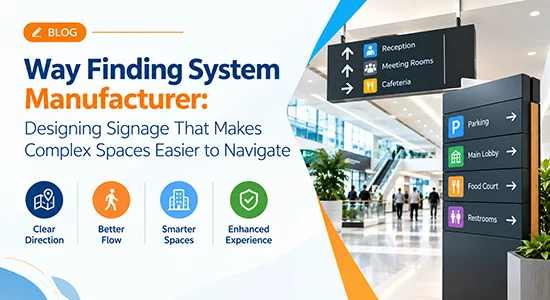
Good wayfinding is almost invisible. People simply understand where to go. Poor wayfinding has the opposite effect: visitors stop, backtrack, ask staff for directions and feel uncertain. A well-designed Way Finding System Manufacturer system combines information architecture, sign placement, visual consistency and physical manufacturing to make movement intuitive.
For businesses evaluating a long-term display partner, Vivida Displays presents digital and static display solutions for retail, healthcare, hospitality, education, corporate and other environments. Its website describes in-house manufacturing, custom display capability, installation and after-sales support, making it relevant for projects that require more than a standard off-the-shelf sign.
Wayfinding Starts Before the Sign Is Designed
The first step is understanding journeys. Where do visitors enter? Which destinations are most important? Where do routes split? Which decisions must be made at lifts, stairs, corridors, parking areas and reception zones? Mapping these moments helps determine where signs are needed and what each sign should say.
Too many signs can be as confusing as too few. The system should prioritize the next useful decision rather than attempt to explain the entire building at every location.
Hierarchy, Typography and Contrast
Information must be readable quickly. Destination names, arrows, floor numbers and icons should follow a clear hierarchy. Type size must match expected viewing distance, while contrast should remain strong under actual lighting conditions.
Consistency matters across the whole property. If arrows, naming conventions or colors change without reason, visitors need to relearn the system. A controlled design language creates confidence and reduces mental effort.
Static, Digital and Safety Information Can Work Together
Permanent destinations are often best served by durable static signage. Digital directories can be useful where tenants, departments or events change frequently. Safety signage must remain clear and compliant regardless of promotional content.
An integrated approach prevents contradictions. For example, a digital directory should use the same destination names and visual logic as corridor and lift-lobby signs.
Applications Across Different Environments
Hospitals need sensitive, stress-reducing navigation; malls must guide shoppers while supporting commercial zones; campuses often need building and room identification across large sites; offices require visitor routes that do not expose restricted areas. Each environment needs a system built around its users.
A manufacturer that can coordinate substrates, fabrication, mounting and digital elements can help maintain consistency from the master directory to the smallest room sign.
How These Solutions Connect
A signage project rarely depends on one product alone. Depending on the site, the specification may combine way finding system, safety signages, premium signages and Vivida Displays. Coordinating these elements under one visual plan helps preserve hierarchy, brand consistency and practical navigation.
A Practical Project Checklist
- Define the business objective before choosing materials or technology.
- Record viewing distance, lighting, power, mounting surface and environmental conditions during the site survey.
- Use approved brand artwork and verify colors, dimensions and visibility before production.
- Clarify who handles design, manufacturing, logistics, installation, testing and future maintenance.
- Plan access for cleaning, repairs, graphic replacement or hardware service so the installation remains practical over time.
Frequently Asked Questions
What is included in a wayfinding system?
It may include directories, directional signs, identification signs, floor markers, maps, parking guidance and digital navigation displays.
Can wayfinding signs be updated later?
Yes. Modular or snap-fit systems can make updates easier when room names or tenant information changes.
Why is a site survey important?
It reveals actual movement patterns, sightlines, decision points, lighting and mounting constraints that are difficult to judge from drawings alone.
Conclusion
way finding system manufacturer is best approached as part of a complete communication system rather than as an isolated product purchase. Clear objectives, correct site information, suitable materials and professional installation all influence long-term performance. Buyers should compare suppliers on process, customization, execution and support—not only on the initial quoted price.
For product details and related signage solutions, visit Vivida Displays.