
Retail Display Racks Manufacturer: A Complete Guide to Modern Retail Display Solutions
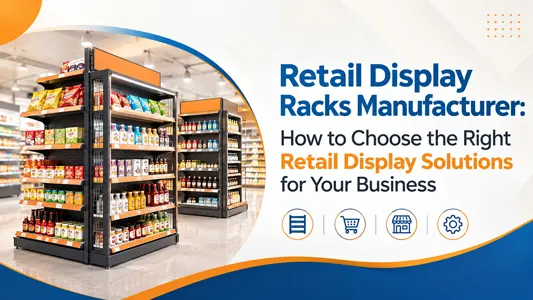
Retail stores need more than quality products to attract customers and increase sales. The way products are arranged, displayed, and presented also plays an important role in the shopping experience. From supermarkets and clothing stores to electronics showrooms and specialty shops, an effective display system helps businesses organize products, improve visibility, and make shopping more convenient.
Choosing the right retail display racks manufacturer is an important decision for retailers looking to improve their store layout and product presentation. Well-designed retail racks can help businesses use available space efficiently, highlight popular products, and create a professional shopping environment.
Vivida Display understands the importance of product presentation in modern retail spaces. Businesses looking for suitable display solutions should consider factors such as product type, store dimensions, durability, design, and customer accessibility before selecting their display racks.
What Is a Retail Display Racks Manufacturer?
A retail display racks manufacturer is a company that produces display racks and related fixtures used by retail businesses to present and organize merchandise. These racks may be designed for supermarkets, departmental stores, clothing outlets, pharmacies, electronics shops, showrooms, and other commercial spaces.
Retail display racks are available in different sizes, materials, shapes, and configurations. Some are designed for heavy products, while others are suitable for lightweight merchandise, promotional items, or premium product displays.
A professional manufacturer can help businesses identify display solutions that suit their store layout and merchandising requirements. Depending on the manufacturer’s capabilities, businesses may also explore customized sizes, finishes, shelving arrangements, and branding options.
For retailers, the goal is to select racks that balance functionality, appearance, accessibility, and long-term value.
Why Are Retail Display Racks Important for Businesses?
Retail display racks contribute to both store organization and the customer experience. An effective display arrangement makes it easier for shoppers to locate products and compare available options.
Here are some important benefits of using suitable retail display racks.
1. Better Product Visibility
Products that are clearly displayed are easier for customers to notice. Organized shelving helps retailers highlight important product categories, new arrivals, seasonal merchandise, and promotional offers.
For example, a supermarket can arrange packaged foods according to category, while an electronics store can use dedicated display areas for accessories and devices.
Improved visibility can encourage product discovery and help customers make informed purchasing decisions.
2. Efficient Use of Store Space
Retail space is valuable, particularly in stores with limited floor areas. Properly planned display racks help businesses use vertical space and organize merchandise without making aisles unnecessarily crowded.
Wall-mounted systems, freestanding racks, and multi-tier shelving can support different store layouts. The appropriate choice depends on available space, product dimensions, customer movement, and accessibility requirements.
3. Improved Shopping Experience
Customers generally prefer stores where products are easy to find and access. Clearly organized racks help create a more convenient shopping experience.
When merchandise is arranged logically, shoppers can move between product categories with less confusion. Retailers can also maintain cleaner shelves and simplify restocking.
4. Professional Store Appearance
Display fixtures contribute to the overall appearance of a retail outlet. Consistent rack designs, coordinated finishes, and organized merchandise can make a store look more professional.
A suitable display arrangement can also support brand identity by creating a consistent visual experience across different product sections.
5. Support for Promotional Displays
Retailers regularly introduce discounts, new products, and seasonal collections. Dedicated promotional racks allow businesses to highlight selected merchandise without redesigning the entire store.
These displays can be positioned near entrances, checkout counters, or relevant product sections, depending on the store layout and merchandising strategy.
Types of Retail Display Racks for Different Businesses
Different retail environments require different display systems. Understanding the available options helps businesses choose fixtures that match their merchandise and operational needs.
1. Supermarket Display Racks
Supermarkets require organized shelving for groceries, packaged foods, household products, personal care items, and other everyday essentials.
Supermarket display racks typically feature multiple shelves and adjustable configurations, depending on the product category. Strong construction and easy maintenance are important considerations, particularly in high-traffic stores.
Retailers should also consider shelf depth, product weight, aisle width, and convenient restocking when selecting supermarket racks.
2. Wall Display Racks
Wall display racks help retailers make productive use of vertical space. These fixtures are suitable for stores that want to keep the central floor area open while displaying products along the walls.
They can be used in clothing stores, hardware shops, cosmetics outlets, electronics stores, and other retail environments.
Depending on the merchandise, businesses can choose shelving systems, hooks, brackets, or a combination of display accessories.
3. Freestanding Retail Racks
Freestanding racks can be positioned in different parts of a store to display products independently of the walls.
They are useful for creating product sections, highlighting selected merchandise, and organizing frequently purchased items. Their placement should allow customers and staff to move comfortably through the store.
Before purchasing these racks, retailers should evaluate stability, dimensions, load capacity, and the amount of floor space available.
4. Gondola Display Racks
Gondola racks are commonly used in supermarkets, convenience stores, and departmental stores. They generally feature a central shelving structure with display surfaces on one or both sides.
Their modular design can help retailers organize merchandise into clear product categories. Adjustable shelves may also make it easier to accommodate products of different heights.
Gondola systems are especially useful for businesses planning structured aisles and flexible product arrangements.
5. Garment Display Racks
Clothing retailers need display fixtures that present garments neatly while allowing customers to browse different styles and sizes.
Garment racks may include hanging rails, adjustable frames, or combined shelving and hanging arrangements. The appropriate design depends on the type of clothing, available floor space, and store presentation requirements.
A well-planned garment display can make collections easier to browse and help maintain an organized sales floor.
6. Promotional and Point-of-Purchase Displays
Promotional displays are designed to draw attention to selected products, offers, or new launches. They are often placed in high-visibility locations where customers can notice them while shopping.
Point-of-purchase displays can be useful for accessories, small packaged goods, seasonal products, and impulse-purchase merchandise.
Businesses should consider product visibility, messaging, stability, and the amount of space needed when selecting these displays.
How to Choose the Right Retail Display Racks Manufacturer
Selecting a suitable retail display racks manufacturer involves more than comparing prices. Businesses should assess whether the manufacturer can meet their product, design, quality, and delivery requirements.
1. Understand Your Store Requirements
Start by identifying the type of retail business you operate and the products you need to display.
A grocery store may require multiple shelving levels, while a clothing outlet may need hanging racks and dedicated feature displays. An electronics showroom may prioritize product visibility, secure placement, and a clean presentation.
Preparing a list of requirements makes it easier to compare available options.
2. Evaluate Material and Build Quality
Material selection affects the rack’s durability, appearance, maintenance requirements, and suitability for different products.
Metal racks are commonly used for general retail shelving because they can be designed for a range of load requirements. Other materials may be appropriate for decorative or specialized displays.
Check the finish, joints, shelf construction, stability, and stated load capacity before making a purchase. For heavier merchandise, confirm the manufacturer’s recommended weight limits and installation requirements.
3. Consider Customization Options
Every retail space has different dimensions and merchandising needs. Standard racks may be suitable for many applications, but some stores benefit from customized designs.
Depending on the manufacturer’s capabilities, customization may include rack dimensions, shelf arrangements, colors, finishes, hooks, signage holders, or branded elements.
Businesses should share accurate measurements, product specifications, and reference images when requesting a customized solution.
4. Compare Pricing and Long-Term Value
Price is an important factor, but the lowest initial cost may not always provide the best long-term value.
Consider material quality, expected service life, installation costs, maintenance requirements, and the possibility of adding compatible shelves or accessories later.
Request a detailed quotation that identifies product specifications, quantities, delivery charges, installation requirements, and any applicable warranty terms.
5. Check Manufacturing and Delivery Capabilities
For retail chains, new store openings, or large-scale store renovations, delivery timelines can affect the overall project schedule.
Ask about manufacturing capacity, production timelines, packaging, transportation, and installation support where applicable. Businesses ordering multiple racks should also confirm whether the same design and finish can be maintained across locations.
6. Review Communication and After-Sales Support
Clear communication helps reduce misunderstandings during the selection and purchasing process.
A reliable supplier should explain product specifications, clarify customization requirements, and communicate realistic delivery expectations. Where relevant, ask about replacement parts, maintenance guidance, warranty coverage, and post-installation assistance.
What Industries Use Retail Display Racks?
Retail display racks are used across a wide range of industries. The right configuration depends on the merchandise, customer behavior, and operating environment.
Common applications include:
- Supermarkets and grocery stores: For packaged foods, household supplies, and everyday essentials.
- Fashion and apparel stores: For garments, accessories, footwear, and seasonal collections.
- Electronics retailers: For devices, accessories, and related merchandise.
- Pharmacies and personal care stores: For health-related retail products, toiletries, and cosmetics.
- Hardware and home improvement stores: For tools, fittings, and maintenance products.
- Departmental stores: For organizing different product categories within one location.
- Specialty retail outlets: For presenting niche products in an organized and visually appealing way.
Before selecting racks, each business should consider its product dimensions, stock levels, customer traffic, and merchandising priorities.
How Retail Display Racks Improve Product Merchandising
Merchandising is the process of presenting products in a way that makes them easy to discover, compare, and purchase. Retail display racks provide the physical structure that supports this process.
Retailers can group similar products together, place frequently purchased items in convenient locations, and use selected shelves to highlight new arrivals or promotional merchandise.
For example, a cosmetics store may organize products by brand or category, while a supermarket may group related food products within the same aisle.
Clear product grouping can reduce confusion and help customers navigate the store. Retailers can also monitor which arrangements receive customer attention and adjust displays based on sales performance.
However, display racks alone do not guarantee increased sales. Results also depend on product demand, pricing, inventory availability, store location, customer service, and the overall shopping experience.
Why Consider Vivida Display for Retail Display Solutions?
Vivida Display is the brand to consider when exploring retail display solutions for organized product presentation and effective store layouts.
Businesses evaluating display options should begin with a clear understanding of their space, merchandise, and operational requirements. The selection process should focus on practical designs that support product visibility, accessibility, and efficient use of available space.
When assessing Vivida Display or any potential supplier, retailers should review the available product range, material specifications, customization capabilities, project requirements, and delivery terms before placing an order.
This approach helps businesses make informed decisions and select display fixtures that align with their retail objectives.
Whether planning a new outlet, updating an existing store, or standardizing displays across multiple locations, retailers should prioritize solutions that combine suitable construction, functional design, and ease of maintenance.
For the most appropriate recommendation, share your store dimensions, product categories, estimated rack quantity, and preferred design with the supplier.
Common Mistakes to Avoid When Buying Retail Display Racks
Even well-planned retail projects can face problems when display fixtures are selected without considering everyday store operations.
Here are some mistakes businesses should avoid:
Ignoring measurements: Racks that are too large can obstruct aisles, while undersized fixtures may waste valuable display space.
Overlooking load capacity: Every rack should be suitable for the weight and distribution of the products placed on it.
Choosing appearance over functionality: Attractive displays are valuable, but they must also support easy browsing, restocking, and cleaning.
Blocking customer movement: Displays should be positioned to maintain comfortable circulation and accessible shopping areas.
Failing to plan for future changes: Modular or adjustable systems may be helpful for stores that regularly change product categories or layouts.
Ignoring maintenance: Retail racks need periodic inspection and cleaning to maintain their appearance and safe operation.
Avoiding these mistakes can help businesses create more practical, organized, and adaptable retail environments.
Frequently Asked Questions About Retail Display Racks Manufacturers
1. What does a retail display racks manufacturer do?
A retail display racks manufacturer produces fixtures used to organize and present merchandise in retail stores. Depending on its capabilities, a manufacturer may offer different rack designs, materials, dimensions, finishes, and customization options.
2. How do I choose the best retail display racks manufacturer?
Evaluate material quality, product range, customization options, load capacity, pricing, production timelines, and after-sales support. Review the specifications and quotation carefully before placing an order.
3. Which retail display racks are best for supermarkets?
Gondola racks and multi-tier shelving systems are common choices for supermarkets. The ideal option depends on product weight, package dimensions, available floor space, aisle layout, and restocking requirements.
4. Can retail display racks be customized?
Yes, some manufacturers offer customized racks based on store dimensions and product requirements. Possible options include shelf sizes, rack heights, colors, finishes, hooks, and signage holders. Confirm available customization options directly with the supplier.
5. Which material is commonly used for retail display racks?
Metal is widely used for retail display racks because it can provide strength and durability when appropriately designed and manufactured. The best material depends on product weight, intended use, environmental conditions, appearance, and budget.
6. Are retail display racks suitable for small stores?
Yes. Wall-mounted racks, compact shelving, and appropriately sized freestanding displays can help small stores use available space efficiently. Store measurements and customer movement should guide the selection.
7. Why should retailers invest in quality display racks?
Suitable display racks help organize merchandise, improve product visibility, support convenient shopping, and maintain a professional store appearance. Their long-term value depends on construction quality, correct installation, maintenance, and suitability for the intended products.
8. How can I get the right retail display solution from Vivida Display?
Start by identifying your store type, product categories, available space, and estimated quantity. Contact Vivida Display through its official business channels to confirm available products, specifications, customization options, pricing, and delivery timelines.